


Introduction
In the past, drying out after a water disaster meant guessing where moisture lurked, ripping open walls indiscriminately and waiting weeks for evaporation. Today’s restoration industry looks very different. Thanks to advances in detection, drying and air purification technology, trained technicians can locate moisture without demolition, dry structures faster and improve indoor air quality. For homeowners, this means less disruption, lower costs and better outcomes. Let’s explore the tools and techniques that set First Response Restoration apart and how they make a tangible difference in West Virginia homes.
Infrared Thermal Imaging

One of the most valuable tools in modern restoration is the infrared thermal imaging camera. This device detects temperature differences on surfaces, allowing technicians to see “cold spots” where moisture may be present behind walls, ceilings or floors. Because wet materials retain heat differently than dry ones, thermal images reveal areas of concern without drilling or tearing down materials. AdvantaClean notes that professionals use infrared cameras alongside moisture meters to accurately map dampness. This technology reduces unnecessary demolition, saving time and money while ensuring that hidden moisture doesn’t linger.
Moisture Meters and Hygrometers
Infrared cameras indicate where to investigate, but moisture meters provide precise readings. Pin‑type meters use two probes inserted into wood or drywall to measure electrical resistance; the more moisture present, the lower the resistance. Pinless meters use radio waves to scan larger areas quickly. Hygrometers measure relative humidity in the air. Technicians take readings at multiple points during the drying process to determine when materials have returned to safe levels. Without these instruments, there is no objective way to know if a structure is fully dry.
Desiccant and Refrigerant Dehumidifiers
Removing moisture from air is essential to drying structures. Two primary types of commercial dehumidifiers are used:
- Refrigerant dehumidifiers: These work like air conditioners. Moist air passes over cold coils, causing water vapor to condense into a collection tray. They operate efficiently in warm, humid conditions.
- Desiccant dehumidifiers: DryBoston notes that desiccant units are a key technology in modern restoration. They draw air through a wheel coated with a silica gel that adsorbs moisture. The system then heats the wheel to release the absorbed moisture outdoors. Desiccant dehumidifiers perform well at lower temperatures and lower humidity levels, making them ideal for cool basements or winter drying in West Virginia. They can also achieve lower relative humidity than refrigerant units, which speeds up drying.
Technicians choose the appropriate dehumidifier based on the environment. In a cold, damp basement in Elkins, a desiccant unit may be the best choice, while a warm summertime leak in Huntington might call for a refrigerant model.
Air Scrubbers and Ozone Generators

Drying is only part of the restoration process. Water damage can release mold spores, bacteria and unpleasant odors. Air scrubbers use powerful fans to draw air through HEPA filters, capturing particles as small as 0.3 microns and purifying indoor air. Some models also incorporate activated carbon filters to remove odors.
For odor removal, ozone generators and hydroxyl generators are used in unoccupied spaces. Ozone is a strong oxidizer that breaks down odor‑causing molecules, but it must be used carefully and requires evacuating people and pets during treatment. Hydroxyl generators produce reactive hydroxyl radicals that neutralize odors without harmful ozone levels. DryBoston’s article lists air scrubbers and ozone generators as key technologies.
Antimicrobial Agents and Cleaners
Cleaning and disinfecting are crucial after water damage, especially if water is contaminated. Restoration technicians apply antimicrobial agents to discourage mold, bacteria and mildew growth. DryBoston notes that specialized cleaners help combat microbes on porous and non‑porous surfaces. Using the right products at the correct concentrations protects occupants’ health and prevents recolonization. Fogging and spraying methods ensure that treatments reach hidden recesses.
Remote Monitoring Sensors and Digital Documentation
Modern restoration doesn’t stop when technicians leave at the end of the day. Remote monitoring sensors placed in affected areas transmit real‑time temperature and humidity data to a central system. This allows technicians to adjust dehumidifiers and air movers remotely and ensures continuous drying even when no one is on‑site. Remote monitoring also provides an audit trail for insurance adjusters.
Digital documentation tools, such as moisture mapping apps and cloud‑based project management, streamline communication between technicians, project managers, homeowners and insurers. Photos, readings and notes are stored securely and can be shared instantly, ensuring transparency and accountability.
How First Response Integrates Technology
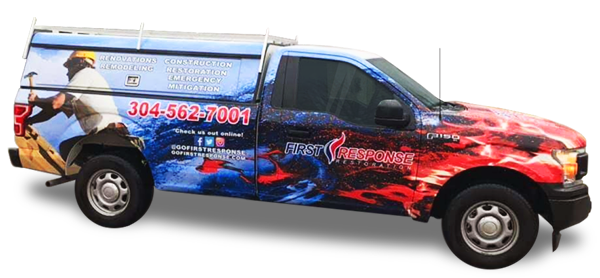
First Response Restoration invests heavily in equipment and training. Their technicians use infrared cameras and pinless moisture meters during initial assessments to locate hidden dampness. Depending on the environment, they deploy desiccant or refrigerant dehumidifiers and configure air movers to create optimal airflow. HEPA air scrubbers run continuously during drying to remove airborne spores and particulate matter, and hydroxyl generators treat odors safely in occupied homes. Technicians apply EPA‑registered antimicrobials to prevent mold growth and sanitize surfaces. In large or complex losses, they install remote monitoring sensors that send real‑time data to supervisors, allowing adjustments without constant site visits.
Training is just as important as equipment. First Response technicians hold IICRC certifications and receive ongoing education on new technologies and techniques. They understand when to use each tool and how to interpret data. For example, in a historic home in Lewisburg, they used thermal imaging to detect moisture behind plaster walls, avoiding unnecessary demolition. In a warehouse in Clarksburg, remote sensors monitored humidity after hours, preventing rewetting when a cold front moved in.
Benefits to Homeowners
Investing in advanced technology yields tangible benefits for homeowners:
- Less demolition: Infrared imaging and moisture meters allow technicians to target only the affected areas, preserving more of your home.
- Faster drying: Proper equipment selection and remote monitoring speed up drying, reducing disruption and the risk of mold.
- Better air quality: Air scrubbers and antimicrobial treatments remove contaminants, making your home safer for children, the elderly and those with respiratory conditions.
- Accurate insurance claims: Digital documentation and moisture mapping provide clear evidence of the damage and the steps taken to remediate it, smoothing the claims process.
- Peace of mind: Knowing that your restoration company uses the latest tools and techniques gives you confidence that your home will be restored correctly.
Conclusion
Water damage restoration is no longer guesswork—it’s a precise science powered by advanced technology. From thermal imaging and moisture meters to desiccant dehumidifiers, air scrubbers, antimicrobial treatments and remote sensors, these tools allow professionals to dry, clean and restore homes more efficiently and effectively than ever before. First Response Restoration leverages these technologies throughout West Virginia, ensuring that your home is not only dry but also clean, safe and fully documented for insurance purposes. When choosing a restoration partner, look beyond the basics and select a company that invests in innovation. Your home and health deserve nothing less.